Entry · Ref YZUZO1J6
Why Choosing the Right German Kitchen Manufacturer Matters for Your Renovation
- Posted
- 2026-10-28
- Last amended
- 2026-10-28
- Account
- @germankitchenmanufacturerspace
Walking into a luxury kitchen showroom in Glasgow a few years ago, I was looking for something that would stand up to family life without looking like a trade kitchen. A friend had just finished a renovation using a German kitchen manufacturer, and the quality was obvious from the first drawer close. That experience led me down a rabbit hole of research, and I ended up spending weeks comparing German kitchen manufacturers before making a choice. What I learned is that the term covers a wide range of approaches, from mass-produced units to fully bespoke kitchens, and the difference between them matters more than most people expect.
What Defines a German Kitchen Manufacturer
When people talk about German kitchen design, they often mean the precision engineering that goes into cabinets, hinges, and drawer systems. But a German kitchen manufacturer is not a single type of company. Some focus on high-volume production with standardised modules, while others operate more like ateliers, producing a limited number of kitchens each year with a high degree of customisation. Brands such as SieMatic, Leicht, Rational, Eggersmann, and Schüller all sit under this umbrella, yet each has a distinct philosophy.
SieMatic, for instance, is known for its minimalist approach and handleless doors, which have become a hallmark of contemporary German kitchens. Leicht emphasises architectural integration, often working with architects on open-plan kitchens. Rational and Eggersmann lean toward the luxury end, offering a wider palette of materials and finishes. Schüller strikes a balance between quality and cost, making it popular for projects where budget is a consideration but performance cannot be compromised.
Understanding these distinctions helps when you walk into a showroom. If you are looking for a kitchen that will last twenty years, the choice of German kitchen manufacturer is as important as the style you pick.
The Role of German Engineering in Everyday Use
German engineering is a phrase that gets thrown around a lot, but in a kitchen it translates to specific, tangible things. Soft-close hinges are standard, not an upgrade. Drawer runners are tested to carry heavy loads without sagging. Worktops are often quartz or solid surface, chosen for durability and ease of maintenance. These details may seem small, but they add up over years of daily use.
I once helped a friend spec a kitchen from a German manufacturer, and the difference in hardware was immediately clear. The drawers moved with a smooth, controlled motion that cheaper systems lack. The soft-close mechanism on the doors was silent. It sounds trivial, but when you are cooking at seven in the evening with the whole family around, those small comforts matter. That kind of consistency is what German kitchen manufacturers aim for, and it is one reason they remain popular in the UK market.
Bespoke Kitchens vs. Modular Systems
One common misconception is that all German kitchens are modular and therefore limited in customisation. In reality, many German kitchen manufacturers offer a spectrum of services. At one end, you have standardised ranges that can be ordered with various door styles and colours. At the other, you have fully bespoke kitchens where every cabinet is made to your dimensions, and you can specify materials like European oak, lacquered finishes, or even metal fronts.
If you are working with an unusual room shape, or you want a kitchen that blends into an open-plan living space, a modular system might require compromises. That is where a bespoke approach from a manufacturer like Eggersmann or Rational can be worth the investment. They will work with your designer to produce a layout that fits exactly, rather than forcing your space into a standard grid.
That said, modular systems have their own strengths. They are typically quicker to produce and install, and the cost is more predictable. For a straightforward rectangular room, a high-end modular kitchen from SieMatic or Schüller can look just as polished as a fully bespoke one.
Material Choices and Longevity
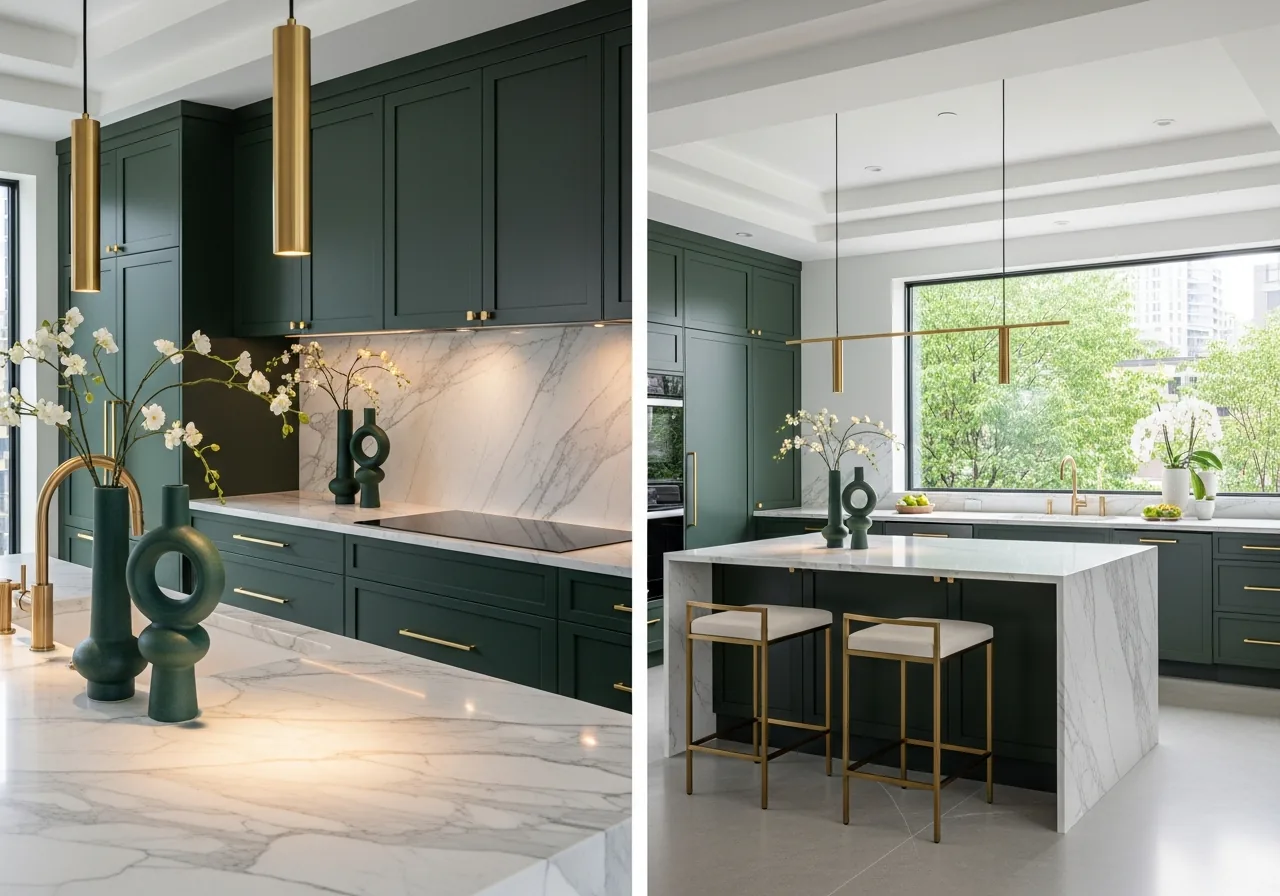
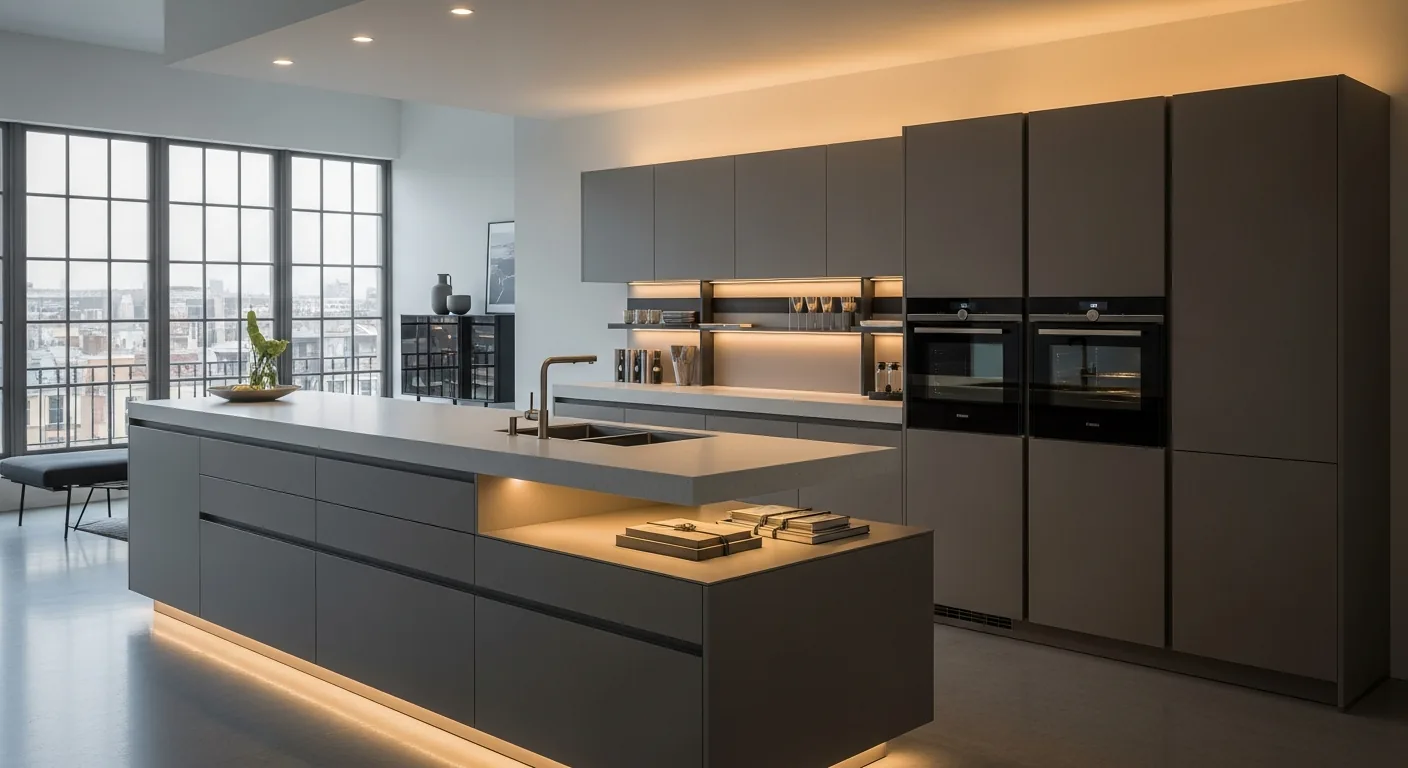
Materials are another area where German kitchen manufacturers tend to excel. Many use European oak for solid wood cabinets, often with a clear oil finish that shows the grain. Quartz worktops are common, chosen because they resist staining and scratching better than marble or granite. Handleless doors, a signature of German design, keep the visual line clean and make cleaning easier.
I have seen kitchens from German manufacturers that are twenty years old and still look current. The reason is partly the materials and partly the joinery. Cabinets are built with thicker panels than budget alternatives, and the edges are sealed properly to prevent moisture damage. Soft-close hinges and drawer runners from companies like Blum or Grass are standard, and these components are designed to be replaced if they ever fail. That kind of repairability is rare in mid-range kitchens.
How to Evaluate a German Kitchen Manufacturer
When you are visiting a luxury kitchen showroom, you can get a sense of quality by doing a few simple checks. Open and close every door and drawer. Listen for any rattling or uneven movement. Look at the alignment of panels and doors. A well-built kitchen should have consistent gaps and no visible sagging even on wide drawers.
It is also worth asking about the manufacturing process. Some German kitchen manufacturers produce everything in-house, while others source components from a network of suppliers. There is nothing wrong with the latter approach, but it can affect lead times and the level of quality control. If you are working with a designer, a design consultation should include a detailed discussion of materials, finishes, and how the kitchen will be assembled on site.
Another practical point is delivery and installation. German kitchens are typically flat-packed and assembled by a fitter. The quality of the installation matters as much as the quality of the cabinets. A good showroom will recommend experienced installers who understand the specific brand you have chosen.
Styling and Trends: From Modern Farmhouse to Scandinavian Simplicity
German kitchen manufacturers have expanded their style range significantly in recent years. Modern farmhouse kitchens, with shaker-style doors and warm wood tones, are now available from brands that were once purely minimalist. At the same time, Scandinavian simplicity remains a strong influence, particularly in open-plan kitchens where the kitchen blends into the living area.
I recently saw a kitchen from Leicht that combined light oak cabinets with a dark quartz worktop and open shelving. It had the clean lines of German engineering but the warmth of Scandinavian design. That kind of hybrid style is becoming more common, and it shows that German manufacturers are responsive to changing tastes.
When you are thinking about style, consider how the kitchen will age. A very trend-driven design might look dated in ten years. A more classic combination, such as white or pale grey cabinets with a natural wood accent, tends to stay relevant longer. Many German kitchen manufacturers offer a wide enough range of finishes that you can find something that feels current but not faddish.
Working with a Showroom in Glasgow
If you are based in Scotland, having a local luxury kitchen showroom that represents multiple German brands is a huge advantage. You can compare different manufacturers side by side, touch the materials, and ask questions that are specific to your project. 44 Interiors West, for example, carries several German lines and offers a design consultation service that helps you narrow down the options.
One thing I appreciated when I visited a similar showroom was the lack of pressure. The designer listened to what I needed, asked about how I use the kitchen, and then guided me toward the brands that fit. That kind of service is especially valuable when you are investing in a kitchen that you expect to keep for a long time.
It is also worth asking about lead times. Some German kitchen manufacturers have longer production schedules than others, especially if you are ordering bespoke cabinets. Planning ahead by a few months can save you a lot of stress later.
Final Thoughts
Choosing a German kitchen manufacturer is not just about the brand name. It is about understanding what each company does best and matching that to your priorities. If you value engineering precision and modern design, SieMatic or Leicht might be the right fit. If you want a bespoke kitchen with a wider choice of materials, Eggersmann or Rational are worth exploring. And if you need a reliable, well-built kitchen at a more accessible price point, Schüller is a strong contender.
The most important step is to visit a showroom and see the kitchens in person. No amount of online research can replace the experience of opening a drawer from a German kitchen manufacturer and feeling how well it is made. That hands-on judgment, combined with good advice from a knowledgeable designer, will lead you to a kitchen that works for your home and your lifestyle.